
A space for thought-provoking questions, quotes, and reflections to spark growth for your career, faith, and creativity. Quarterly, discover new prompts designed to help you pause, think deeply, and find practical wisdom for your journey.
Stay Curious! Reflect Deeper! Live Wiser!
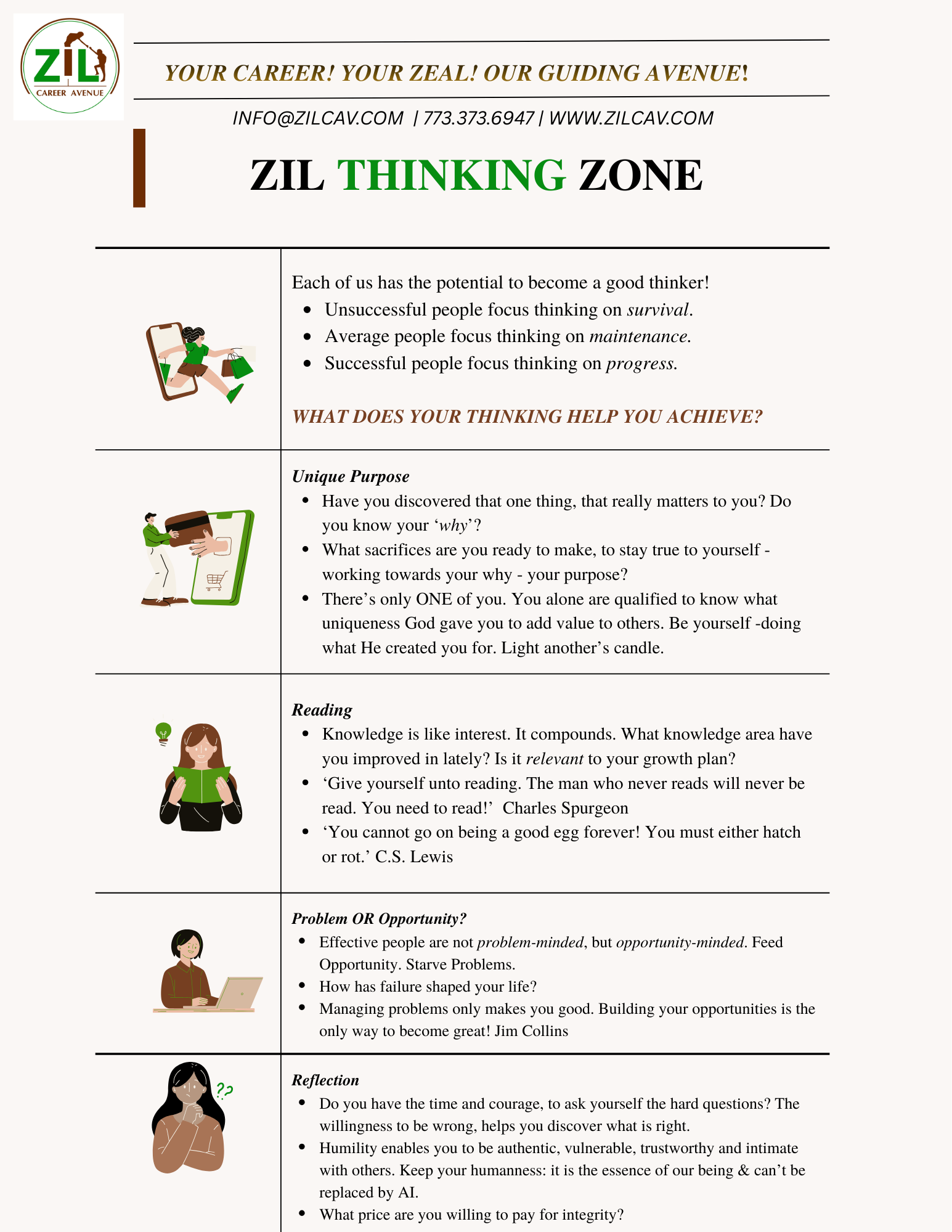
Think Deliberately! Grow Intentionally!
FAITH
Identity | Integration | Calling.

Each day awakens with a different sun expression.
By faith Abraham, when he was tested, offered up Isaac, and he who had received the promises offered up his only begotten son, 18 of whom it was said, ‘In Isaac your seed shall be called,’ 19 concluding that God was able to raise him up, even from the dead, from which he also received him in a figurative sense. 17-19
Abraham’s Faith Features and Translation to Work place:
- Faith surrenders the cherished. God asked to have Isaac, the long-awaited cherished son. Abraham was asked to surrender the very thing his faith had produced. Faith is not tight-fisted. It opens the hands that received; releasing gifts back to God, even when things are very unclear.
- Faith quickens obedience. It doesn’t challenge God’s ways and wisdom. Instead, it reasons with self! Making informed decisions based on the knowledge of God. It wasn’t blind obedience; he reasoned and settled the case with conviction: ‘God could raise the dead.’ He could do it again because God himself had affirmed Isaac the son of the promise would carry the inheritance.
- Faith endures tests. He received Isaac back – figurative resurrection. The surrender and return were both real. Faith anchored in God’s character carried him through it all. He completely trusted God to take care of business as He sees best. He believed God always has the best plan and end.
Principle: More than trusting God for the promise, the deepest test of faith is whether we trust God to do as He wishes with it, once it arrives. Faith is not the absence of reason, but reason anchored in God’s faithfulness. What you release in faith, God is able to return transformed. He does much more than we can fathom. [Eph.3:20]
Faith Application:
- Does not idolize resources! That thing you worked hardest for, waited longest on, sacrificed most to build; the position, business, reputation, team can become your quiet idol that replaces God. Faith asks searching question: am I tight-fisted about the promise? Am I spending too much time with the gift vs with God? Mature faith knows how to steward God-given resources with an open hand.
- Introspects! Thinks through life situations. Faced with challenging situations – a closed door, lost opportunity, shattered plan; Abraham’s faith models reflective thinking. Don’t just absorb the loss. Reason through it. What do I know about God that is still true in this moment? Has He given you any reason to doubt His faithfulness? Introspecting faith is more resilient and responsive (quickened obedience) than emotions.
- Remains faithful! At times faithfulness may mean letting go of: a role, vision, plan you are certain was God-given. Abraham’s faith rests in the Giver, regardless of outcome. He settled that nothing surrendered in genuine faith is ever wasted. God accounts for each act of trust and obedience. Whatever He returns will always exceed what we give. We can never outgive God!
Think About It:
- Stewardship! Am I tight-fisted over the resources God has given me? Would I pass the endurance test if God asked for it? (Name it).
- Reason over emotion! Who is God to me? When faced with a professional dead end, will I still trust Him to come through for me?
- Certainty! Is there something I previously released in faith, that I am still waiting on God for? Faith is being sure and certain of what we hope for; God will not delay. Do I trust His timing?
By faith…
By faith Abraham obeyed when he was called to go out to the place which he would receive as an inheritance. And he went out, not knowing where he was going. 9 By faith he dwelt in the land of promise as in a foreign country, dwelling in tents with Isaac and Jacob, the heirs with him of the same promise; 10 for he waited for the city which has foundations, whose builder and maker is God. 8-10
Abraham’s Faith Features and Translation to Work place
- Obeys without all details. Solely relied on the promise of inheritance. Faith believed in the Person, Source of the Word. Never asked questions. He was called to go. He was obedient without knowing the destination. Faith moved his feet, before his mind had answers.
- Patiently ekes out a living. Faith does not negate responsibility. He lived in the promised land as a foreigner, in tents with other heirs of the same promise. Faith held on to the promise without the prize, irrespective of circumstances. He waited for God to give him the land of promise.
- Firm, supported, anchored in the vision. More than waiting for the land, he was waiting for a city with foundations; something eternal, unshakeable, and built by God himself. His confidence was rooted in what no eye could see – beyond the visible.
Principle: Faith is substantive confidence. It obeys without a full explanation. It endures without immediate possession. It lives in the temporary without being unsettled by it; because what is coming is more real than what is currently visible.
Faith Application
- Acts despite uncertainty. Most professional environments reward certainty. The full plan is required before commitment. The guaranteed outcome before we invest, the clear path before we take the first step. Abraham challenges this instinct entirely-confidently acting on the unknown.
- Acts without details. There will be assignments you are called to do without a complete brief. Projects that seem to lack what you envision. They seem like there is nothing in it for you, pulling you away from your normal. They look nothing like the promise. But here’s where faith works best. It gives God room to prove Himself.
- Pitches a tent in the waiting season, without feeling less than. Abraham’s faith says: obey and stay anyway. Keep eyes on something longer than the moment. The professional who operates with this faith is anchored deeper than their current circumstances, patiently waits for the not yet; a state essential for success. A state of belief that He who watches doesn’t slumber.
Think About It:
- Calling! Is God calling me to step out in faith and take on responsibility? Am I hesitant because I don’t have the full picture yet?
- Resilience! How am I holding up between the now-and-the-not yet? Is my faith anchored in the season of promise as I press on in the tough moment?
- Building! Have I factored God in my future career plans? Are they anchored in His Wisdom, my understanding; or something that circumstances alone can collapse?
By faith…
By faith Noah, being divinely warned of things not yet seen, moved with godly fear, prepared an ark for the saving of his household, by which he condemned the world and became heir of the righteousness which is according to faith. 7
Noah’s Faith Features and Translation:
- Opens doors to divine interaction and responds to Warning: Noah was warned about things not yet seen (future flood / judgment). He believed God’s word about an unprecedented future event. Faith opened his spiritual eyes to see the invisible before it’s visible; talking about it as reality. By building the ark, faith acted on divine revelation, not present evidence.
- Holy Fear and Obedience: In holy fear – reverent respect for God’s word. Respect led to action – built an ark. Tangible, costly obedience over many years. An action that saved his family – faith protected those in his care.
- Faith testifies. Noah had a dual outcome: His obedience highlighted others’ unbelief; condemning the world. He became an heir of righteousness; receiving right standing with God. His response created both a testimony against unbelief and inheritance of righteousness.
Principle: Faith takes God’s warnings seriously and obeys even when things don’t make sense.
Faith Application:
1: Preparation Over Popularity: Noah built an ark when there wasn’t any rain. He likely faced widespread mockery. In the workplace, faith may mean preparing to stand for what God has revealed through His moral code – Scripture and conviction (ethical standards, coming changes, principled stands) even when colleagues see no need. Are you willing to do what seems unnecessary to others because God has warned / convicted you?
2: Reverent Obedience in Long Projects: Noah worked for decades on a seemingly absurd project. Faith in the workplace may mean sustained obedience in doing tasks that may take years to validate [building systems with integrity, investing in people, maintaining standards when shortcuts are available]. Holy fear and trust keep you faithful when immediate results don’t appear.
3: Protective Leadership: Noah’s faith saved his family. His obedience protected his connections. In your workplace sphere of influence (team members, employees, colleagues); does your faith-driven conduct create a protective culture? Your integrity, stand for truth, warnings about cutting ethical corners may save others from consequences you can foresee.
4: Silent Condemnation: Noah’s righteousness condemned the world not through preaching but through contrast. His obedience exposed others’ rebellion [disobedient to God’s patience 1Pet.3:20]. Your faithfulness at work may convict and / or silently challenge the status quo. When you refuse to lie on reports or compromise standards, your actions speak louder than words.
Think About It:
- Preparation: Am I willing to act on what God has shown me, even when workplace culture sees no urgency or need for it? Can I prepare for invisible, future opportunities God has shown me; even when things don’t currently add up?
- Perseverance: Do I maintain a holy fear and faithful obedience serving God in handling long-term projects or standards, even when years pass without visible validation?
- Influence: Is my faith protecting those in my sphere of influence, or am I only concerned with my own righteousness and advancement? From my conduct and response to situations at work, does my faith have a positive influence on the cloud of witnesses?
By faith……
By faith Enoch was taken away so that he did not see death, ‘and was not found, because God had taken him’; for before he was taken he had this testimony, that he pleased God. But without faith it is impossible to please Him, for he who comes to God must believe that He is, and that He is a rewarder of those who diligently seek Him. 5-6
Enoch’s Faith Features and Translation:
- The Non-Negotiable Foundation. Without faith it is impossible to please God!
Faith is non-negotiable for those seeking to honor God. In the market place our professional excellence, ethical decisions, and relationships must be rooted in faith-driven conviction; not merely out of convenience or expediency. Just as Enoch couldn’t please God without faith, believers in the marketplace can’t truly honor God through competence alone. Faith must undergird our labor. Belief in God to empower your excellence.
- The Testimony of Consistency. He was commended as one who pleased God!
Prior to disappearance, Enoch had ‘this testimony, that he pleased God.’ This is a sustained witness- over 300 years of walking with God; not a one-time event. By faith he believed all he knew about God as fact so; he conformed his character and conduct to that. In the workplace, this speaks to the power of consistent, long-term faithfulness. Your daily reliability, integrity in small matters, and steady character over the years creates a testimony that transcends any single achievement. Colleagues notice when someone consistently operates from principle rather than convenience. And above all, the God we represent is honored through this conduct and character.
- The Dual Conviction. ‘Anyone who comes to God must believe that he exists and that he rewards those who earnestly seek him’
Enoch’s faith was both belief in God’s existence and in His responsiveness to seekers. In the workplace, this means maintaining both theological conviction – God is present and sovereign in corporate meetings, difficult projects, and workplace conflicts and practical hope – God sees your faithfulness. He will honor it, even when promotions are delayed or credit is taken by others. This dual conviction prevents both empty ritualism and cynical disengagement.
Faith Application
- Faith guides our conscience to believe in the invisible God’s existence and His willingness to reward His seekers.
- Faith leads us to live lives that seek and please God. It Ignites obedience and trust which attract God to do the impossible for us. ‘Enoch did not see death. God took him.’ Faith is the only channel through which to please God. ‘Without faith it is impossible to please God.’
Think About It:
- Is my faith compartmentalized or negotiable, believing God can only handle some situations? Is my work driven by faith in God’s purposes, or am I relying on my skills and strategies to get by?
- Is my faith fueling a testimony of consistency – in character integrity, action, word, prayer? What reputation am I building through my daily choices at work: one of convenience and compromise, or of steady faithfulness over time?
- Do I have a dual conviction of God’s revelation? Do I truly believe God sees my work and will honor my integrity, even when no one else notices or rewards it? Do I believe my faith will be rewarded?
By faith…
By faith Abel brought God a better offering than Cain did. By faith he was commended as righteous, when God spoke well of his offerings. And by faith Abel still speaks, even though he is dead.4
Abel’s Faith Features and Translation:
- The Superior Offering: Abel’s offering was better than Cain’s. Not better in appearance or quantity but in faith. A believing obedience. The heart behind the gift matters more than the gift. Abel’s choice of best offering was informed by his conscience from a heart fully devoted to worship. Faith sacrifices. It believes, obeys, hopes, decides and acts; giving God the best of what one has. His belief not the sacrifice bore witness – giving him a favorable disposition in God’s eyes.
- Divine Commendation: God spoke well of Abel’s offerings. Commended him as righteous. God’s approval was from recognizing Abel’s faith and obedience to requiring a sacrifice. Then he obtained a testimony of righteousness. Acts of faith testify to God. Bears witness to our righteousness with God. Is a shield that causes or makes room for God to testify on our behalf.
- Lasting Testimony: Abel still speaks even after death. His faith created a witness that transcends his lifetime. The impact of faithful work, done in obedience to God outlives the worker. Faith results in an eternal testimony, leaves a legacy. ‘Abel still speaks even though he is dead.’ NIV How? Faith acts as a lasting testament of one’s life and values, hence, influences future generations. It serves as a personal, enduring message spoken through actions, stories, or records that bear witness to what a person believed and held dear.
Principle: Faith transforms ordinary offerings into righteous acts that gain God’s approval and creates an enduring testimony.
Faith Application:
1: Quality Over Appearance: God is more impressed by the faith and integrity with which we work than the deliverables. Are you doing excellent work as an act of worship or to impress others? Do you believe God deserves your very best in using your abilities and competencies?
2: Divine vs. Human Approval: Abel sought God’s commendation, not human recognition. In your career, whose approval do you seek first – your boss, peers, or God’s? Faith-driven work through obedience seeks divine validation over earthly approval.
3: Legacy of Faithfulness: Abel’s faithful offering still speaks centuries later. Your work ethic today (with integrity, excellence, and faithful obedience) creates a testimony that outlasts employment, projects, and even your life. Will your work ethic leave a lasting testimony of faith and faithfulness?
Think About it:
- Offering! Is my work an offering to God done in faith and obedience, or am I just going through the motions to meet expectations? Does my faith testify of my worship by reverence for God?
- Testifies! Will I leave a legacy of faith that testifies of my faithfulness to God? Is my work creating a testimony that will speak of faithfulness long after I’ve moved on?
- Bold! Does my faith lead me to put on the breastplate of righteousness in the marketplace; which would cause God to stand up for my defense? Am I unashamed of representing him?
By faith …
Now faith is the substance of things hoped for, the evidence of things not seen. For by it the elders obtained a good testimony. By faith we understand that the worlds were framed by the word of God, so that the things which are seen were not made of things which are visible. 1-3
The role of faith: What does faith do?
– Faith gives assurance of what we hope for; things to come in the future. [Return of Christ, eternal life for those who believe in Him]
– Faith provides the conviction of things not seen. [the blood of Christ and forgiveness of sins, the Holy Spirit’s transforming work in a believer’s life]
Through possessing and exercising faith in their daily lives the ancients received divine approval.
‘By faith we understand that the universe was formed at God’s command, so that what is seen was not made out of what was visible.’
Faith in comprehension: Trust in God precedes and enables true comprehension of reality, acting as a lens that reveals divine truth beyond human logic. The visible made from the invisible. Faith perceives and views the creation of the universe as stated by God. It doesn’t question God’s ways. It chooses, settles to understand the power of God’s Word as revealed. More than intellectual knowledge and observation, it enables understanding and perception. We grasp reality and spiritual comprehension by faith.
Faith in creation: universe was formed – ordered, framed by God’s Word. A command, decree. The abstract (Speech) actualized (Universe). The invisible (Word) materialized the visible (creation). The intangible (Command) generated the tangible (world).
The Paradox: Incomprehensibility of God. What is visible (material seen). Came from the invisible (God’s word, not pre-existing matter). The seen originates from the unseen.

Principle: Faith reveals that ultimate reality is spiritual, not material. God’s invisible Word has more power and permanence than anything our eyes can see.
Application: Just as God spoke the world into existence from nothing, faith recognizes God’s purposes and promises in our work are more real and lasting than the visible circumstances (budgets, metrics, office politics) that seem to dominate.
What faith produces: A reoriented perspective. We must learn to trust the invisible (God’s character, promises, presence) over the visible (immediate pressures, apparent outcomes).
Think About It:
- Do I believe God’s invisible purposes are a reality and eternal? Am I making decisions based on what’s immediately visible (profits, politics, pressures)?
- Do I believe God can speak new possibilities into my work situation, even when nothing seems to exist that could change my circumstances?
- What would change in my work ethic if I truly understood that the unseen spiritual realities are more foundational than the seen material?
By faith…
What does faith say about how we live and work?
Faith shapes our identity, informs purpose and speaks to the complexity of real working life.
Faith is confident in hope. It is assured of the invisible. Functional not philosophical. It ‘is’
- present, ongoing: a state of being.
- woven in thought, word, speech. Ingrained.
- Internal not performative.
- Personal – lived out from a place of personal knowledge and values.
Journey with me through Hebrews 11 – as we reflect on Faith in Action. How did the Ancients live out their faith? What practical lessons can we learn from their walk?
We shall look at the ancients’ faith – features, principles, application and reflect.
Faith asks the hard questions: Who are you when there is nothing left to prove?
What would it mean to lead from identity rather than achievement?
By Faith….
And without faith it is impossible to please him, for whoever would draw near to God must believe that he exists and that he rewards those who seek him. Hebrews. 11:6
Reflection
Is there an unseen promise that is fueling your faith?
Do you earnestly believe God is a rewarder of those who seek Him?
What does intentional seeking look like in your daily life?
Have you ever gone to bed genuinely worried that the sun won’t rise tomorrow?
Without even thinking about it, we trust the sunrise. Each night we rest, we are expectant of dawn. This unspoken confidence is faith in action.
Faith invites us to extend to our Creator the same effortless trust we already give His creation. Trust Him. Your sun will rise.
Faith is substantive confidence that shapes how you live. It defines the risks you take, your plans, and what you’re willing to wait for. Let the Sovereign God be the object of your faith.
The Thinking Signature Series: Faith is our monthly editorial. Draws from Scripture to explore thinking as a God-given skill that shapes our faith walk, how we lead with purpose and live with intention.
LIFE – WORK
Purpose | Growth | Direction.

The best thinking rarely happens in a straight line.
The Thinking Signature Series: Life-Work is our monthly editorial exploring thinking as a skill that can be developed. It shapes how we navigate life, lead with clarity, and grow.
The Thinking Professional™
Most professionals invest in what they do. At ZIL, we believe the greatest investment you can make is in how you think.
Thinking is a strategic investment which compounds. The thinking skills you develop today shape the professional, leader, and character you present.
Explore the ZIL ecosystem to grow the thinker in you. OR sign up for the Thinking Professional Workshop.